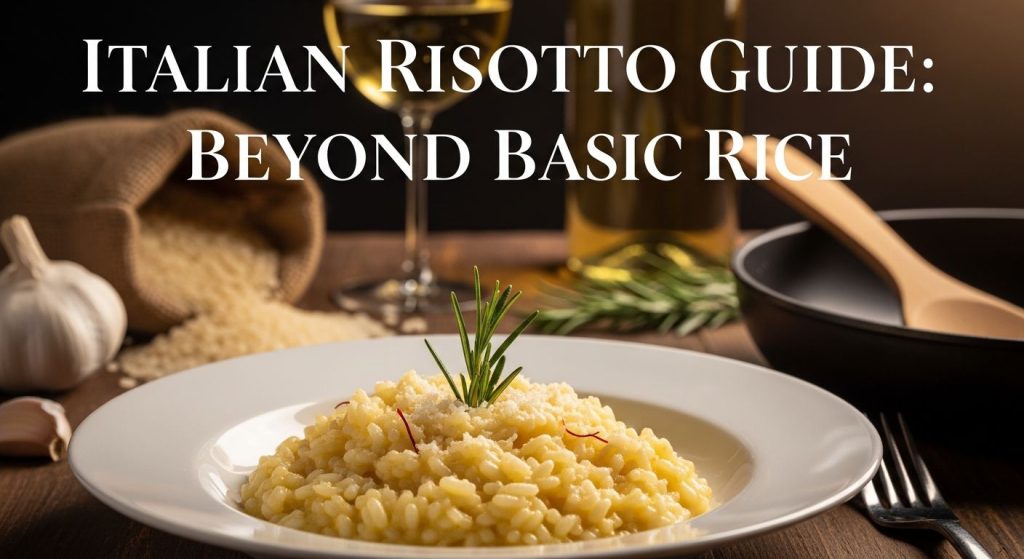

Risotto is one of Italy’s most elegant and beloved dishes, a creamy, luxurious creation that transforms humble rice into something extraordinary. At Ristorante Acquerello, we celebrate this northern Italian masterpiece, preparing each risotto with the patience, technique, and quality ingredients that authentic Italian cooking demands.
But risotto is far more than just rice cooked in broth. It’s a culinary art form with deep regional roots, specific techniques, and endless variations that reflect Italy’s diverse landscape and traditions. Whether you’re curious about the difference between Risotto alla Milanese and Risotto al Nero di Seppia, or wondering what makes risotto so creamy without cream, this guide takes you on a journey through Italy’s risotto culture.
What exactly is risotto?
Risotto is a northern Italian rice dish cooked using a specific technique that creates its signature creamy, flowing consistency. Unlike other rice preparations where grains remain separate, risotto rice releases its starch during cooking, creating a sauce that binds the dish together. The process involves toasting rice in fat (usually butter or olive oil), then gradually adding hot liquid—typically broth—while stirring constantly.
This slow addition of liquid and continuous stirring coaxes the starch from the rice, creating risotto’s characteristic creaminess without any cream. The final dish should be all’onda, meaning “like a wave”—flowing and creamy when you tilt the plate, but not soupy or stiff.
Risotto originated in northern Italy, particularly in the Lombardy and Piedmont regions where rice cultivation thrives in the Po Valley. Today, it’s a staple of Italian cuisine, with each region developing its own signature variations using local ingredients.
What type of rice is used for risotto?
Authentic risotto requires specific short-grain Italian rice varieties with high starch content and the ability to absorb liquid while maintaining structure. The three main varieties are Arborio, Carnaroli, and Vialone Nano. Arborio is the most widely available and features large, oval grains that release starch easily, creating good creaminess. Carnaroli is considered the king of risotto rice by many Italian chefs—it has a higher starch content than Arborio and a firmer grain that holds its shape better, making it more forgiving and less likely to become mushy.
Vialone Nano, a semi-fino variety from the Veneto region, has smaller grains and cooks faster, absorbing more liquid and creating an especially creamy texture favored for seafood risottos. These varieties differ from long-grain rice like basmati or jasmine because their high amylopectin starch content is what creates risotto’s creamy consistency. Regular rice simply cannot produce the same result—the grains won’t release enough starch and will become either mushy or remain separate and dry.
What are the classic regional risotto varieties?
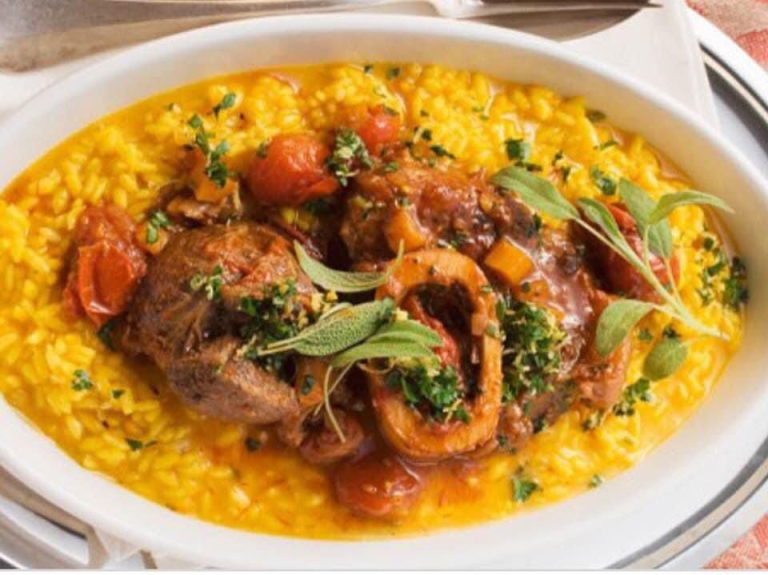
Italy’s regions each boast signature risotto preparations that reflect local ingredients and culinary traditions. Risotto alla Milanese from Milan is perhaps the most famous, featuring saffron that gives it a distinctive golden color and luxurious flavor, traditionally served alongside ossobuco. Risotto al Nero di Seppia from Venice uses cuttlefish or squid ink, creating a dramatic black dish with briny, oceanic flavors. Risotto ai Funghi celebrates Italy’s mushroom culture, particularly featuring porcini mushrooms from Piedmont and Tuscany.
Risotto alla Zucca from Mantua showcases sweet pumpkin or squash, often finished with amaretti cookies for a sweet-savory balance. Risotto al Radicchio from the Veneto uses bitter red radicchio, typically from Treviso, balanced with red wine and sometimes Taleggio cheese. Risotto ai Frutti di Mare is a coastal favorite featuring mixed seafood like mussels, clams, shrimp, and calamari. Risotto al Barolo from Piedmont incorporates the famous red wine, creating a deep purple, intensely flavored dish. Each regional variation tells a story of local agriculture, available ingredients, and centuries of culinary tradition.
What makes risotto creamy if there’s no cream?
The magic of risotto’s creaminess lies in the rice itself and the cooking technique—no cream is added in traditional Italian risotto. Italian risotto rice varieties contain high levels of amylopectin, a type of starch that dissolves in hot liquid. When you toast the rice and gradually add hot broth while stirring continuously, you’re mechanically releasing this starch from the outer layers of each grain.
The constant stirring agitates the rice, encouraging starch release and preventing the grains from sticking to the pan. This released starch suspends in the cooking liquid, creating a naturally creamy, velvety sauce that coats each grain. The final step, called mantecatura, involves vigorously stirring in cold butter and grated Parmigiano-Reggiano off the heat, which further emulsifies the starch and fat into a silky, flowing consistency.
The result is a dish that’s luxuriously creamy yet light, allowing the flavors of the broth and other ingredients to shine through. Adding cream would actually be considered incorrect in traditional Italian cooking and would make the dish heavy and mask the delicate flavors that proper technique achieves.
How long does it take to make risotto properly?
Authentic risotto requires about 18-20 minutes of active cooking time from the moment you add the first ladle of broth until the rice reaches the perfect al dente texture. This cannot be rushed—the gradual absorption of liquid is what creates risotto’s signature texture and allows the rice to release its starch properly. The process begins with toasting the rice in fat for 2-3 minutes until the edges become translucent.
Then you add liquid one ladle at a time, stirring frequently and waiting until each addition is almost completely absorbed before adding more. Some cooks add wine after toasting the rice, which adds acidity and complexity. The broth must be kept hot in a separate pot because adding cold liquid would stop the cooking process and prevent proper starch release.
You’ll know risotto is done when the rice is tender with a slight firmness in the center (al dente), and the consistency is flowing and creamy, not stiff or soupy. The final mantecatura step of stirring in butter and cheese takes another minute or two. Patience is essential—trying to speed up the process by adding all the liquid at once or using higher heat will result in unevenly cooked rice and won’t achieve the proper creamy consistency.
What broth should you use for risotto?
The broth you choose fundamentally impacts your risotto’s flavor since the rice absorbs so much liquid during cooking. For meat-based risottos like Risotto alla Milanese or mushroom risotto, use a rich homemade meat broth (beef, veal, or chicken). Vegetable broth works beautifully for vegetable-forward risottos like asparagus, pumpkin, or radicchio, allowing the main ingredient’s flavor to dominate.
Seafood risottos absolutely require fish or seafood broth to complement the oceanic ingredients—using chicken broth would create a flavor conflict. The quality of your broth matters immensely; homemade broth made from roasted bones and aromatics will always produce superior results compared to commercial bouillon cubes, which can be overly salty and artificial tasting. If you must use store-bought broth, choose low-sodium varieties so you can control the seasoning.
The broth should be kept simmering in a separate pot throughout cooking—this ensures that when you add each ladle to the rice, the temperature doesn’t drop, which would interrupt the cooking process and starch release. Some traditional recipes call for adding warm water toward the end of cooking if you run out of broth, which helps achieve the proper consistency without over-concentrating the flavor.
Can risotto be made ahead of time?
Traditional risotto is best served immediately after cooking, but there is a professional technique that allows partial advance preparation. Many Italian restaurants use a method where they cook the risotto about three-quarters of the way through, then spread it on a baking sheet to cool rapidly, stopping the cooking process. This is called risotto all’onda parziale.
When ready to serve, they reheat the par-cooked risotto in a pan with additional hot broth, stirring until it reaches the perfect consistency, then finish with the mantecatura. This method works well for restaurants serving many covers but requires careful timing and technique. For home cooking, if you absolutely must prepare ahead, you can use this same restaurant method, though the texture won’t be quite as perfect as risotto made fresh from start to finish.
Fully cooked, leftover risotto cannot be successfully reheated to its original creamy consistency—the rice continues absorbing liquid and the texture becomes stiff and gluey. However, leftover risotto isn’t wasted; Italians transform it into arancini (fried rice balls) or risotto al salto (crispy rice pancakes), both delicious ways to repurpose yesterday’s risotto into something new and equally delicious.
What’s the difference between risotto and rice pilaf?
While both are rice dishes, risotto and pilaf use completely different techniques and produce entirely different results. Risotto uses high-starch Italian rice cooked with gradual liquid addition and constant stirring to release starch and create creaminess. The goal is a flowing, creamy dish where the rice binds together in a sauce.
Pilaf (or pilau) typically uses long-grain rice like basmati that’s first toasted, then cooked with a set amount of liquid added all at once, covered, and left undisturbed until the liquid is absorbed. The goal is fluffy, separate grains with no creaminess. Risotto requires constant attention and stirring for 20 minutes, while pilaf is largely hands-off once covered. Risotto should be all’onda (flowing), while pilaf should be dry with distinct grains.
The rice varieties are different—short-grain, high-starch Italian rice versus long-grain, low-starch rice. The flavor profiles differ too; risotto often features dairy (butter, cheese) and wine, creating rich, savory depth, while pilaf typically relies on aromatics like onions and spices. Both are delicious, but they’re fundamentally different approaches to cooking rice.
What are common mistakes when making risotto?
The most frequent error is adding all the liquid at once instead of gradually, which prevents proper starch release and results in rice that’s either mushy or has a soupy, separated consistency. Using the wrong type of rice—like long-grain or standard short-grain instead of proper Italian varieties—won’t produce the characteristic creaminess. Not keeping the broth hot is another common mistake; adding cold liquid to the rice stops the cooking process and disrupts starch release.
Stirring too much or too little both cause problems—constant aggressive stirring can break the grains, while insufficient stirring allows sticking and prevents even cooking. Overcooking the rice until soft and mushy instead of stopping at al dente creates a porridge-like texture that’s nothing like authentic risotto. Adding cream is incorrect in traditional Italian risotto and makes the dish heavy and mask the delicate flavors.
Not performing the final mantecatura (vigorously stirring in cold butter and cheese) means missing the final emulsification that creates the ultimate silky texture. Finally, letting risotto sit before serving causes it to continue absorbing liquid and become thick and gluey—risotto must be served immediately when it reaches the perfect consistency.
Why is risotto considered difficult to make?
Risotto has a reputation for being challenging because it requires constant attention, proper timing, and an understanding of how the rice should look and feel at each stage. Unlike dishes you can leave unattended, risotto demands you stay at the stove for 20 minutes, stirring frequently and making judgment calls about when to add more liquid.
The technique involves multitasking—keeping broth hot while managing the risotto pan, knowing when each ladle of liquid has been sufficiently absorbed, and recognizing the exact moment when the rice is perfectly al dente. There’s a narrow window between undercooked (crunchy in the center) and overcooked (mushy), and this window varies slightly depending on the rice variety and other ingredients.
The final consistency is also a learned skill—understanding what all’onda looks like takes practice, as does executing the mantecatura properly. However, once you understand the process and make risotto a few times, it becomes intuitive. The “difficulty” is more about attention and technique than complex skills. At Ristorante Acquerello, our chefs have perfected this technique through years of practice, ensuring every risotto that leaves our kitchen achieves that perfect creamy, flowing texture that makes this dish so special.
Experience Authentic Italian Risotto at Ristorante Acquerello
Now that you understand the art and tradition behind authentic Italian risotto, we invite you to experience it prepared by our skilled chefs at Ristorante Acquerello in Landquart. Whether you prefer the golden luxury of Risotto alla Milanese, the earthy richness of Risotto ai Funghi, or seasonal variations featuring the freshest ingredients, each risotto we prepare honors the traditional techniques that make this dish extraordinary.
Our chefs dedicate the time, attention, and expertise necessary to create risotto that flows perfectly on the plate, with rice cooked precisely al dente and flavors that showcase quality ingredients. Visit us to taste why risotto, when made properly, is considered one of Italy’s greatest culinary achievements.
Book your table at ristorantacquerello.ch or call +41 81 322 55 00. Buon appetito!